Rust, how a 40,000-hour trio takes over a 500-pop server
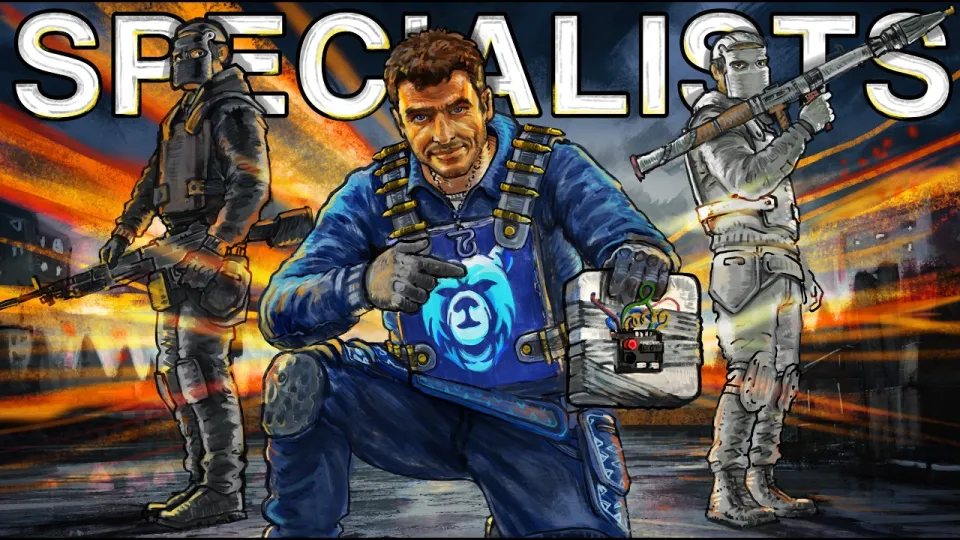
Video: How a 40,000-Hour Trio CONTROLS a SERVER - Rust
You can order the same kind of articles for your own video to boost it on YouTube and Google. Just message the Telegram bot @sat_sit_bot. Articles with your video embedded are written and posted by the bot itself — on popular topical sites (no ads). Free trial — 50 articles.
· based on the channel Blooprint
Rust rewards the group that turns a fresh wipe into momentum fastest, and a trio with roughly 40,000 combined hours does exactly that: Blooprint, Disfigure and Nine start a 500+ population server without a grand plan and end up controlling it through early progression, constant raiding and pressure on every competing group. The full run is documented in the Blooprint video «How a 40,000-Hour Trio CONTROLS a SERVER - Rust», and you can follow the same crew live on Blooprint's Twitch channel.
The interesting part is not that experienced players win fights. It is how three people convert hours played into map-wide control on a server where dozens of other groups are doing the same grind.
What 40,000 hours actually buys a Rust trio
Experience in Rust shows up as fewer wasted minutes, not as magic aim. A veteran trio already knows the wipe timeline: which monuments to contest on day one, when the first sulfur node run pays off, how many rockets a given base needs, and which neighbors are worth scouting before committing explosives.
That knowledge compresses the early game. Instead of experimenting with base locations and farming routes, the trio picks a defensible spot, splits roles and hits the progression checkpoints in order:
- Secure a starter base with enough space for a workbench tier 2 and a small furnace bank.
- Farm scrap through monuments and puzzles while one player holds down the compound.
- Push to tier 3 and explosives before most neighbors finish their first sheet-metal expansion.
- Convert the first raid profits into more explosives and repeat.
On a 500+ pop server this matters more than on a quiet one, because every hour of hesitation is another group building up nearby.
Progression speed as the real win condition
Control in Rust is a scheduling problem: the trio that reaches C4 and rockets first decides which bases disappear. The Blooprint run follows that logic — the group does not sit on loot, it spends it. Sulfur goes into explosives, explosives go into raids, and raid profits fund the next round.
Three players make this efficient in a way solos and duos cannot match. One farms, one crafts and manages the base, one scouts or roams for picks and information. When the group raids, the same split applies: a breacher, a defender watching the flanks, and a player handling counters and door campers.
Gear fear is the usual bottleneck for mid-tier groups. The trio treats top-tier weapons as tools for map pressure, not trophies — an M2 or an L9 in a box protects nothing, while the same gun on a roam can delete an enemy farm run and set another group back an hour.
How the trio handles online raids and revenge
Raiding an active group is where server control is won or lost, because an online defense can flip an entire wipe. The pattern in high-hour play is consistent: scout first, hit when the defenders are split, and keep an escape route and a fallback box ready.
Practical habits that separate a clean online from a disaster:
- Count the explosives needed before you start, then bring 20–30% extra for the inevitable extra wall or a rushed second layer.
- Break doors and soft sides rather than burning C4 on honeycomb you have not scouted.
- Leave one player outside the raid zone to call out counters and incoming groups.
- Move loot in stages instead of one giant run, so a wipe on the way home does not erase the whole profit.
Revenge is the other half of the cycle. Groups that get raided come back with grudges and numbers, so a trio that raids widely has to expect counter-raids, offline attempts and door campers. The Blooprint crew leans into that pressure instead of hiding from it, which is why the wipe escalates from a quiet start into raids on most of the competition.
Common questions from viewers and newer players
The comment section under the video is full of the same doubts that come up whenever a high-hour trio dominates a server, and they are worth answering directly.
Do you need thousands of hours to play like this? No. Hours shorten the learning curve, but the transferable skills are simpler: a repeatable farm route, a base you can defend, and the discipline to spend explosives instead of hoarding them.
Why do experienced players roam with top-tier gear? Because a gun in a box generates nothing. Roaming with an M2 or L9 creates picks, loot and fear, and fear changes how other groups move around the map — that is the actual control mechanism.
Is a trio better than a larger clan? A trio moves faster and shares loot more efficiently. Large clans have numbers but slower decisions and more internal friction, which is why a coordinated three-man group can out-tempo a 10-man team on a busy server.
How do you avoid getting offline raided? You do not fully avoid it. You make it expensive: layered walls, separate loot rooms, and enough activity that attackers expect a fight. Control of a server is partly reputation.
What a controlled server actually looks like
A dominated server shows up in small details rather than a scoreboard. Neighbors stop farming the monuments near your base, rival groups start building farther away, and your raids get answered with negotiation instead of counter-rockets. The trio in the Blooprint video reaches that state by chaining early progression into raids and refusing to let loot sit idle.
For players trying to copy the approach, the order matters more than the aim: pick a defensible base, farm with a purpose, hit tier 3 early, and raid before your neighbors are ready. Repeat that loop for a few days and a trio starts dictating the wipe instead of reacting to it.
Useful links
- Blooprint on Twitch — live streams of wipes, raids and roams.
- Blooprint on Kick — alternative streaming channel.
- Blooprint on TikTok — short clips and highlights.
- Blooprint on Twitter — schedule and updates.
- Blooprint Discord — community, squad-finding and wipe talk.
Bottom line
The Blooprint video makes a simple point about Rust: server control is built from tempo, not from hours alone. A trio that reaches explosives first, spends them aggressively and roams with its best gear turns a fresh wipe into a map-wide pressure campaign. If you want to see that loop executed live, follow Blooprint on Twitch and watch the next wipe from the first farm run. The channel Blooprint is the author of this breakdown and the source of the run described here.
Key takeaways
- Blooprint's trio runs with Disfigure and Nine, three players with a combined ~40,000 hours of Rust experience.
- The wipe starts on a 500+ population server with no big plan — control comes from speed, not a pre-written script.
- Progression is the real weapon: faster farm, earlier explosives, and raids launched while rivals are still on stone.
- The trio raids the competition instead of turtling, which forces other groups to react on Blooprint's schedule.
- High-tier gear like the M2 and L9 goes out on roams rather than sitting in boxes, turning loot into map pressure.
Source: How a 40,000-Hour Trio CONTROLS a SERVER - Rust · Markdown version
Questions & answers
How many hours do the players in the trio have in Rust?
The title puts the trio at roughly 40,000 combined hours, split between Blooprint, Disfigure and Nine. That is experience spread across years of wipes, raids and online defenses rather than a single player's playtime.
Can a three-man group really control a 500+ population server?
Yes, if the trio progresses faster than its neighbors and raids early. Numbers help in a straight fight, but tempo, scouting and explosives decide which bases survive, and a coordinated trio makes decisions faster than a large clan.
Why do they take M2s and L9s out on roams instead of storing them?
Top-tier gear only creates value when it is used. A roam with an M2 or L9 produces picks, loot and pressure, and that pressure changes how other groups move around the map.
What should a newer player copy from this playstyle?
Start with the loop rather than the aim: a defensible base, a repeatable farm route, an early push to tier 3, and explosives spent on raids instead of hoarded. Those habits matter more than raw hours.